Applied AI Cohort 1 at BuildrLabs: A Successful Completion, and What Happened in the Room
Cohort 1 of the Applied AI Bootcamp at BuildrLabs is complete, and Cocoon delivered it. BuildrLabs runs the Applied AI course for professionals at Hatch Works in Colombo; Cocoon designed the curriculum, led the sessions and brought in the practitioner trainers. From July to September 2026, a mixed room of business leaders, founders, senior and mid-level professionals and students went from using AI to building with it, and finished with a build day and final presentations.
The BuildrLabs Applied AI Bootcamp runs on Saturdays at Hatch Works, Colombo. Eight live Saturdays, no coding needed.
Apply here ↗ Talk to Cocoon instead → Corporate AI training for your team →Cohort 1, complete
In September we closed the first cohort of the Applied AI Bootcamp at BuildrLabs. Certificates went out in October, and Cohort 2 is already under way. Before the next one gets busy, I want to write down what happened in the first, because it was one of the best rooms I have taught in.
First, who did what, because people ask. BuildrLabs runs the Applied AI Bootcamp, an applied AI course for non-technical professionals held on Saturdays at Hatch Works in Colombo. Cocoon is its delivery partner. The curriculum grew out of Cocoon’s own AI for Professionals programme and was reshaped into BuildrLabs’ eight-Saturday format. We designed the sessions, brought in the practitioner trainers, and I was the lead trainer for Cohort 1. BuildrLabs ran the cohort around us: admissions, the venue, reminders, recordings and certificates. It was a good split. They looked after the people; we looked after what happened once the session started.
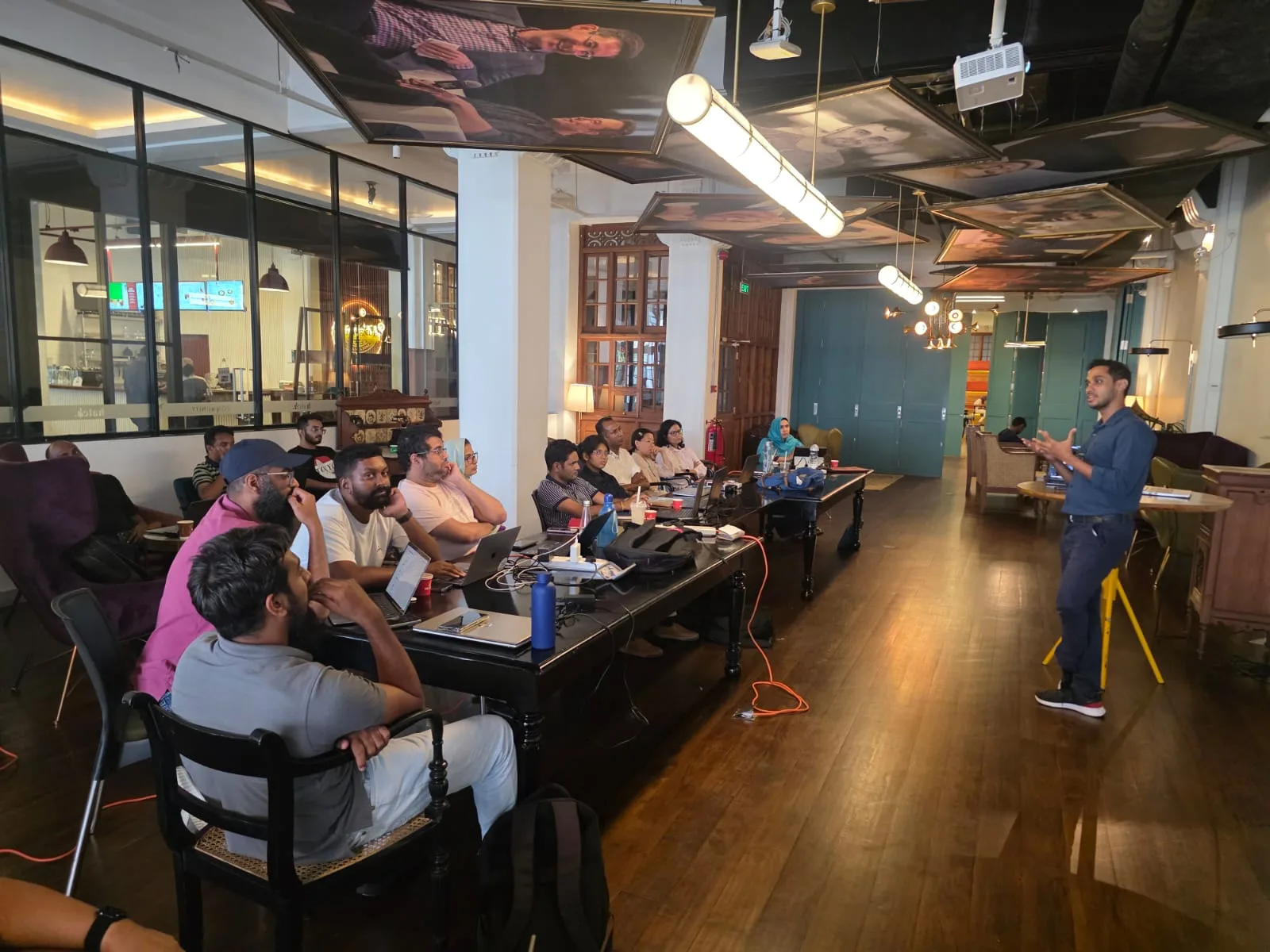
Who was in the room
BuildrLabs puts a simple line on the front of the Applied AI page: AI isn’t just for technical roles. Cohort 1 proved it. The room was a deliberate mix:
- Business leaders and founders, who came with real decisions to make about AI in their companies.
- Senior professionals, who wanted to change how their teams work, not just their own inbox.
- Mid-level professionals across sales, marketing, HR, finance and operations, who wanted their hours back.
- Students, who wanted something real to show before their first job.
On paper that mix sounds hard to teach. In practice it was the best thing about the cohort. The founders asked the business questions everyone needed to hear. The students moved fastest with new tools and showed the room what was possible. The mid-level professionals kept us honest, because they always asked how something would work on Monday, with their actual manager and their actual spreadsheet. Nobody needed to code.
Saturday by Saturday
The format is the one BuildrLabs advertises: live Saturday afternoons at Hatch Works, with Zoom for anyone who could not make it in person. Here is how Cohort 1 actually ran, and who taught each day.
Orientation
Introductions, a walk through the eight Saturdays ahead, and the cohort group that would become the class’s community. Sessions ran on Saturday afternoons at Hatch Works, with a Zoom link for anyone who could not be there in person, and every week closed with a two-minute feedback form so the next Saturday could be tuned to the room.

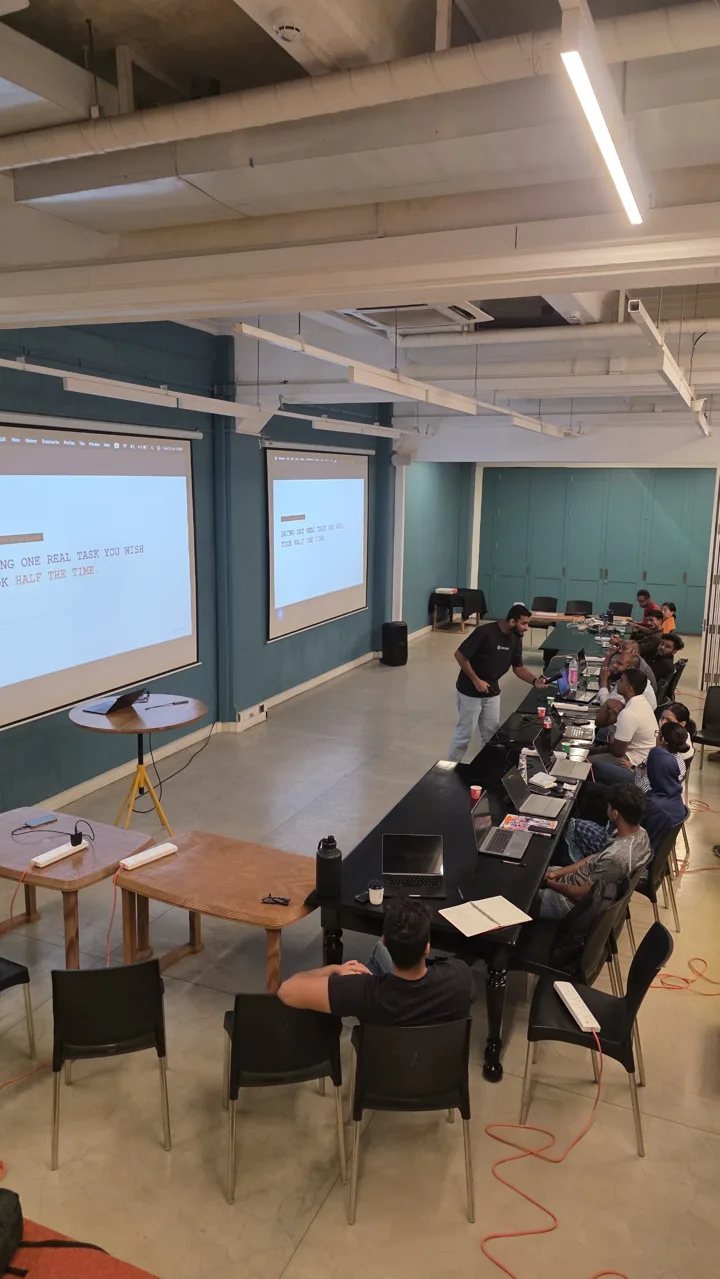
Foundations: thinking with AI, not just using it
How a large language model actually works, how to prompt with structure, and the idea we kept returning to for the rest of the cohort: the goal is not to use AI more, it is to think with it. The recording went up the next morning for anyone who wanted to go back over it.
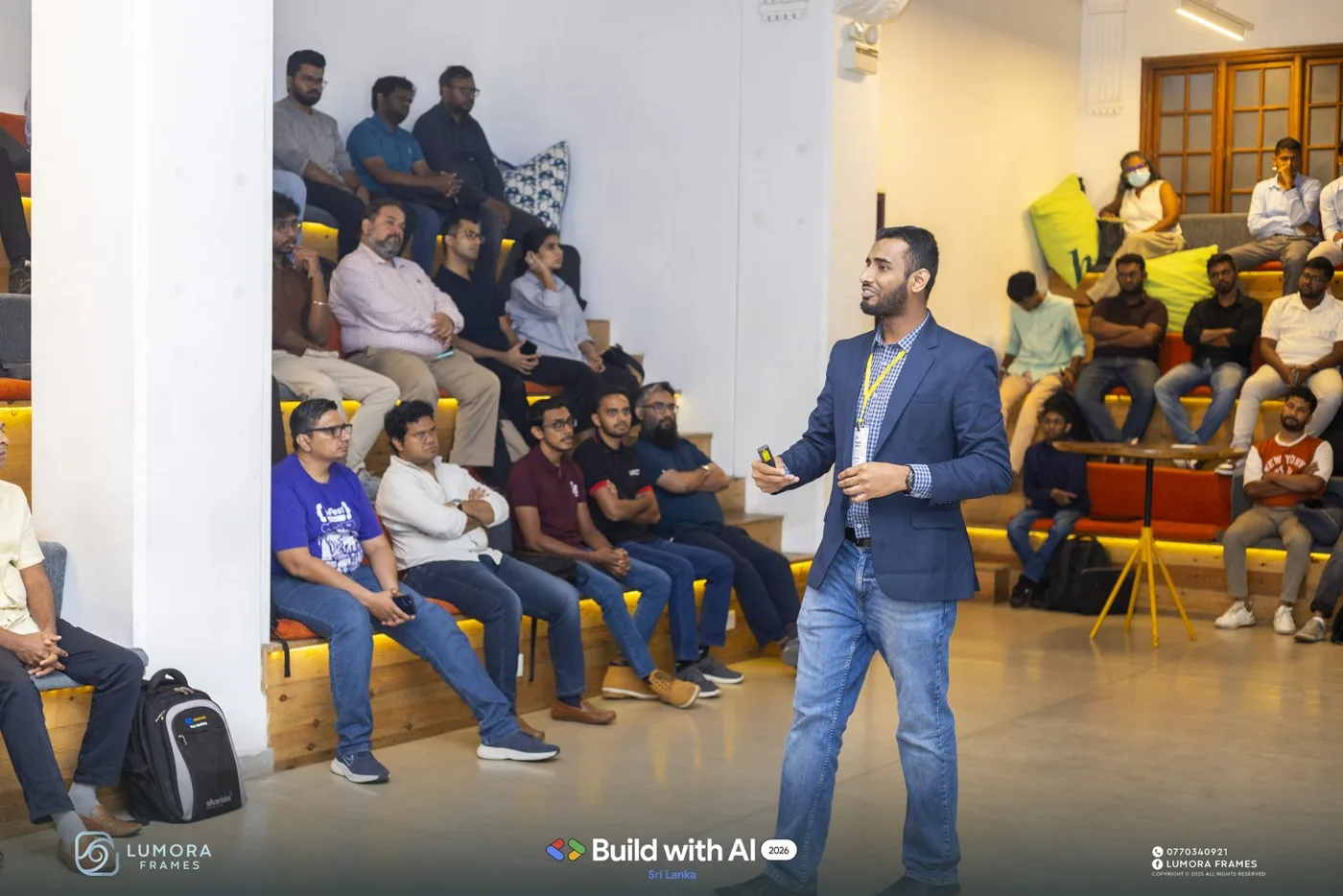
Build with AI Sri Lanka 2026
No regular session this week. Instead the whole cohort went to Build with AI Sri Lanka 2026, the Google Developer Groups event run with Hatch and BuildrLabs at Hatch Works, which drew around 300 registrations. The cohort joined the AI for Industries track, talks and a panel discussion, and everyone who attended could add the event badge to their Google Developer Program profile along with an e-certificate. I spoke in that track too.
Your second brain and your own stack
Setting up a second brain connected to Claude, the productivity tools around it, and a stack that fits your own job rather than a list of fashionable apps. Everyone took home our guide, Build Your Second Brain with Claude + Obsidian.
AI for creativity
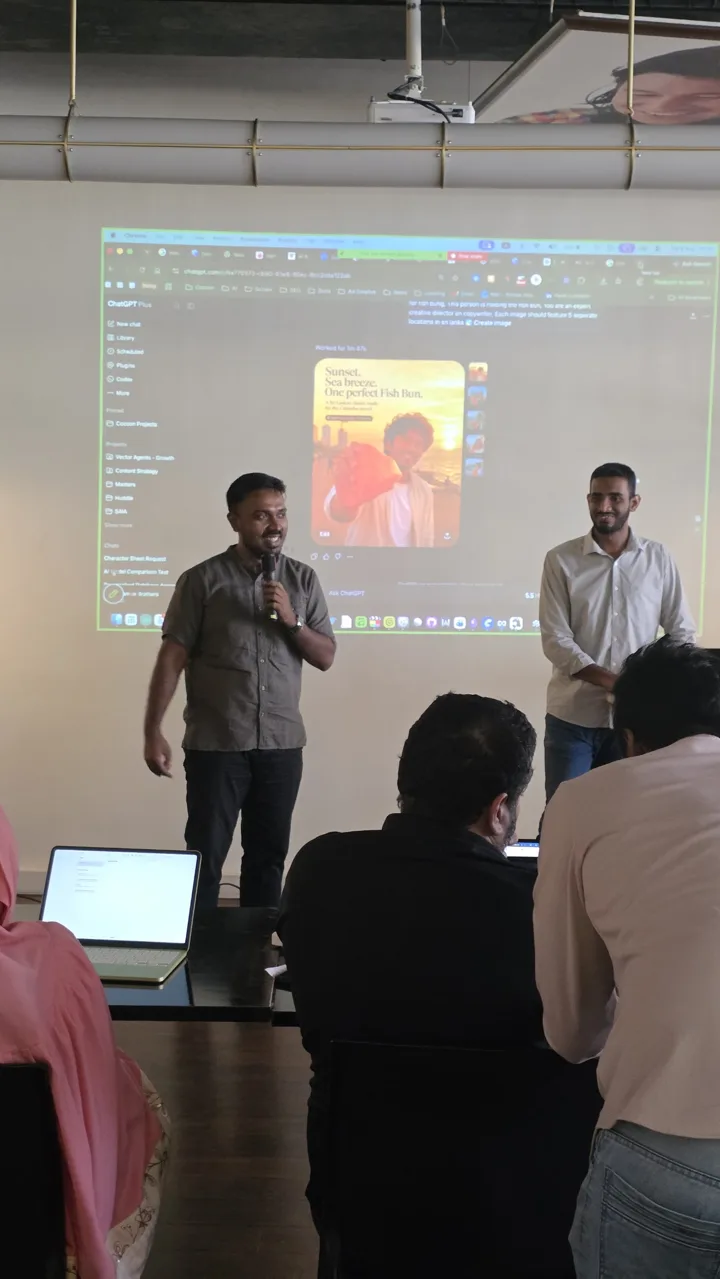
Image, video and audio generation, from the free tools to the paid ones that are worth it. Then teams had to invent a story on the spot and turn it into a finished creative. It was remarkable how fast they came together. The module’s capstone was a 60-second AI-generated video ad.
A small story from that weekend: some people could not use Granola for meeting notes because it asked for a work email. So that night I built a free alternative, Cocoon Notes, and shared it with the cohort the next morning.

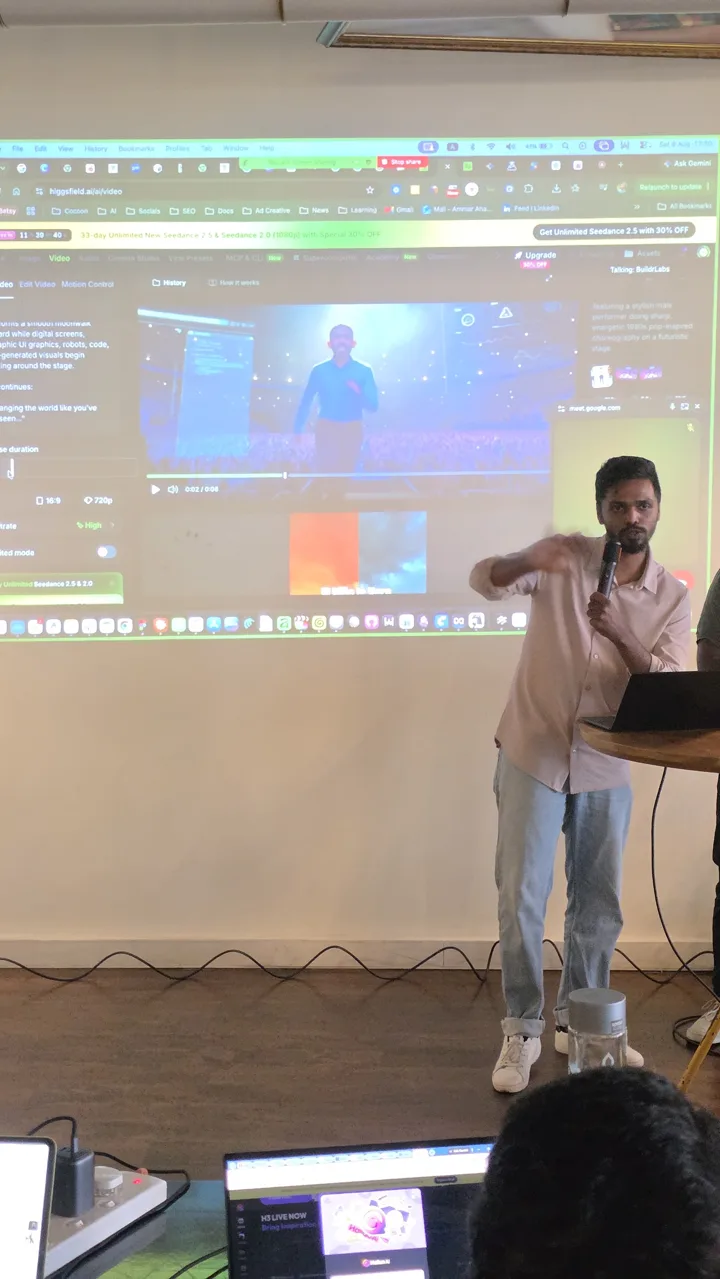
A foundations recap
Before the technical weeks, a whole Saturday at Hatch Chatham to lock in the basics, so the build weeks could go fast. We also ran a short survey to see exactly where each person stood, and adjusted what came next.
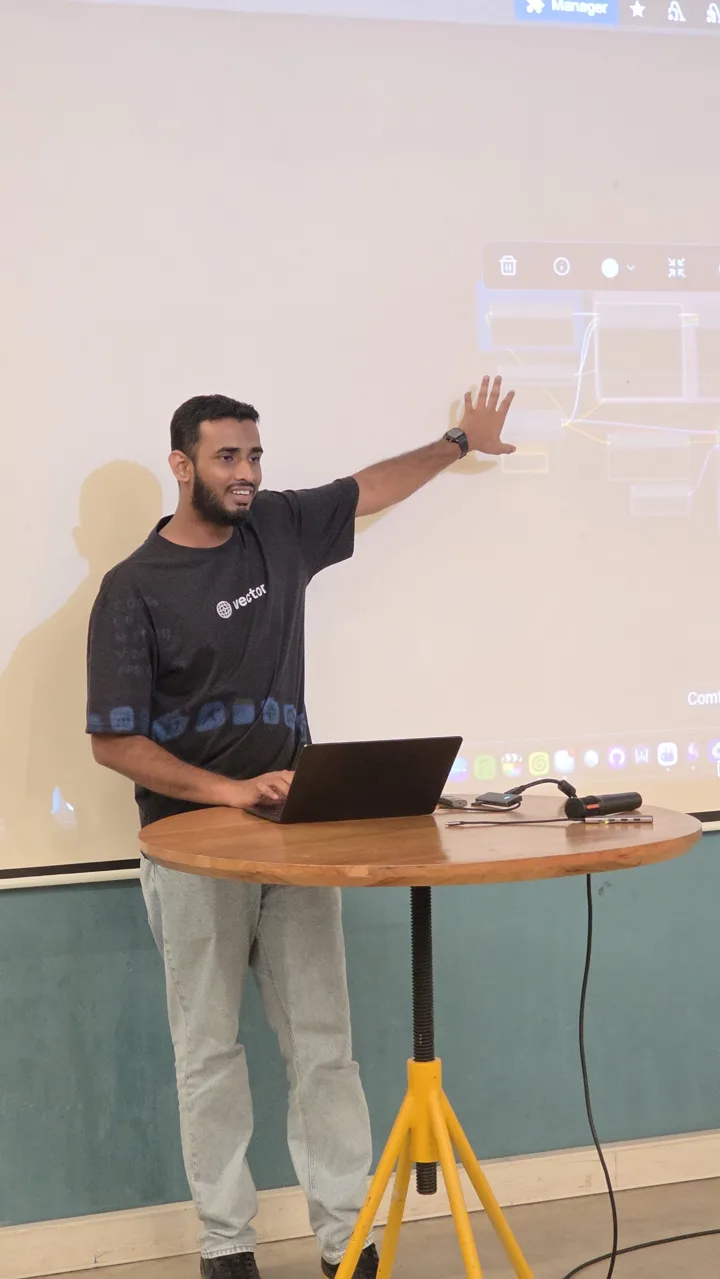
Automations, APIs, MCP, agents and apps
The most hands-on day of the cohort. Everyone arrived having mapped their own work in the Cocoon Workflow Mapper and picked one task to automate, then spent the day on automations, APIs, MCP and agents. Dr Sithira is a physician who became an AI engineer; Saad has a gift for breaking a technical topic into a conversation anyone can follow. Isuru from BuildrLabs came in early to help anyone who needed a hand setting up, and afterwards everyone got the Cocoon Automation Lab to keep practising.


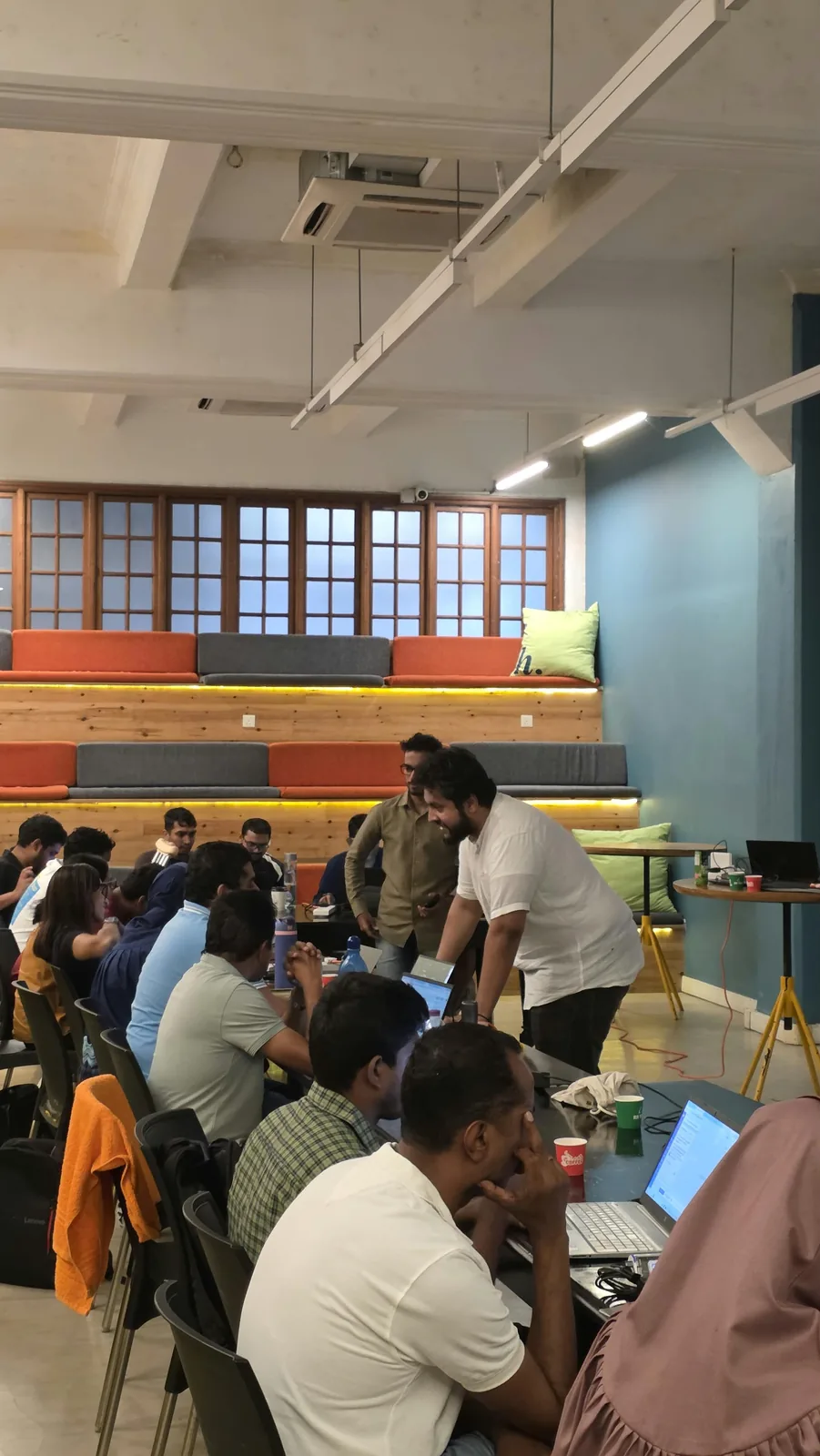
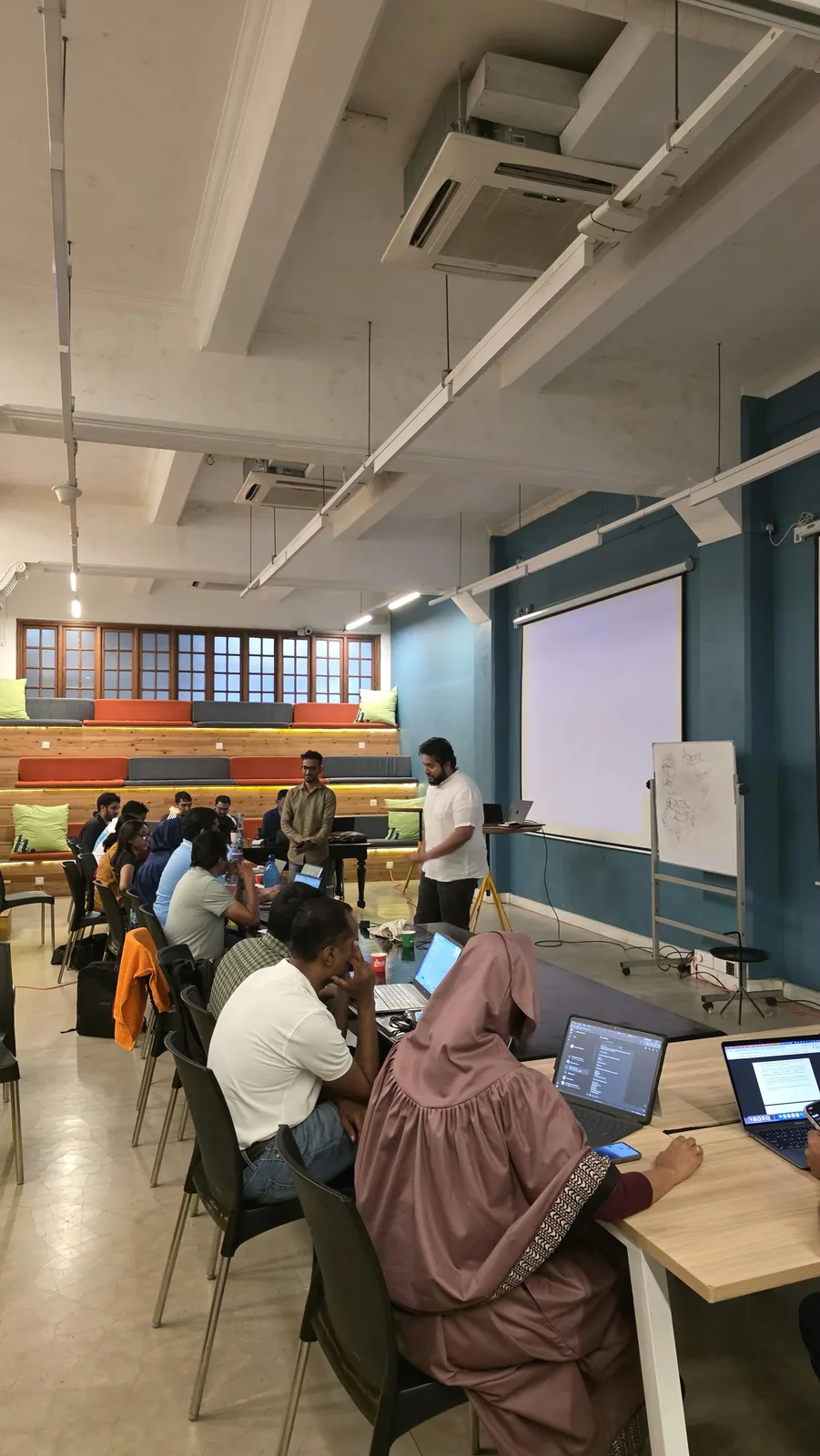
Domain tracks: HR and marketing operations
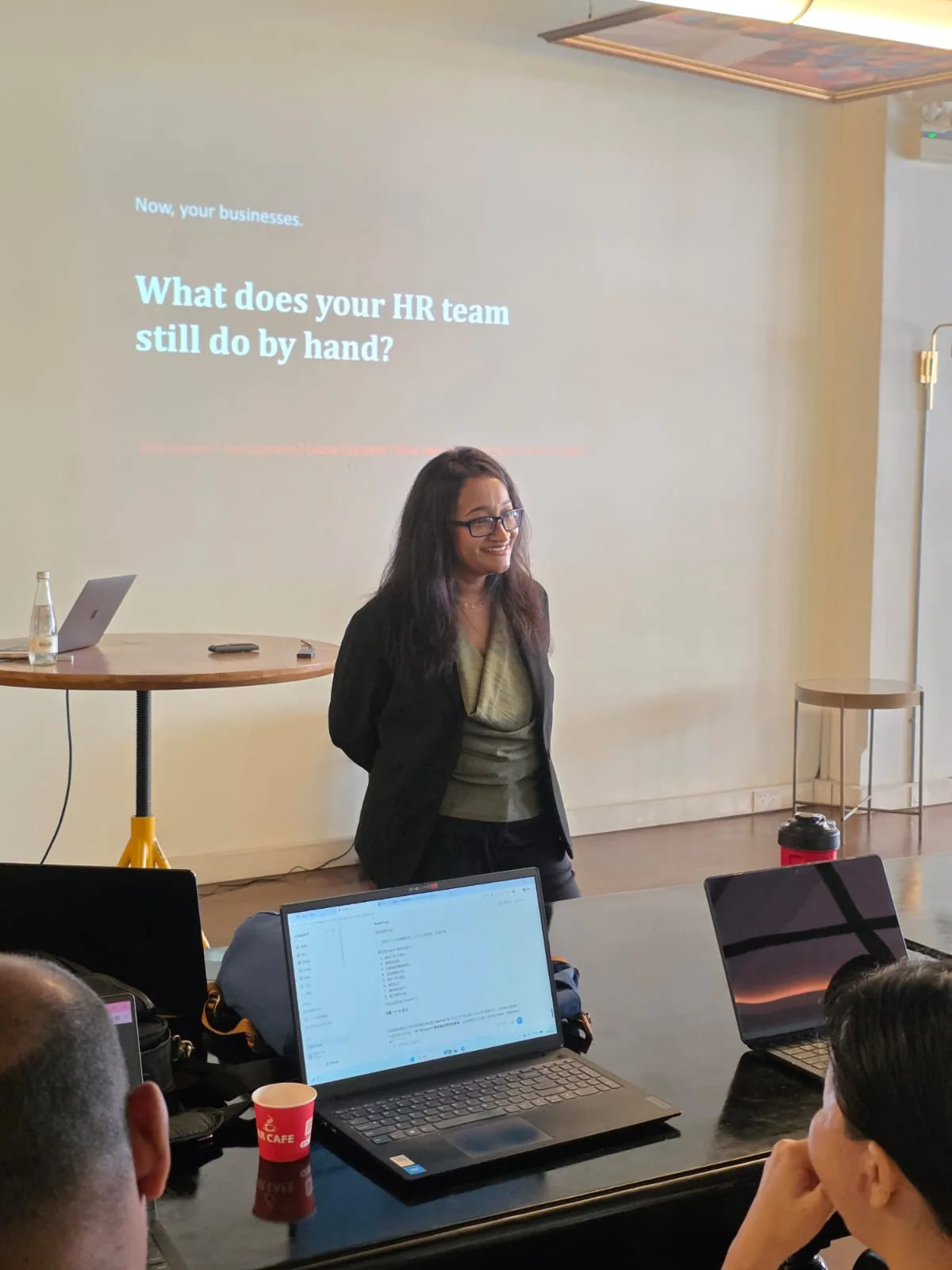
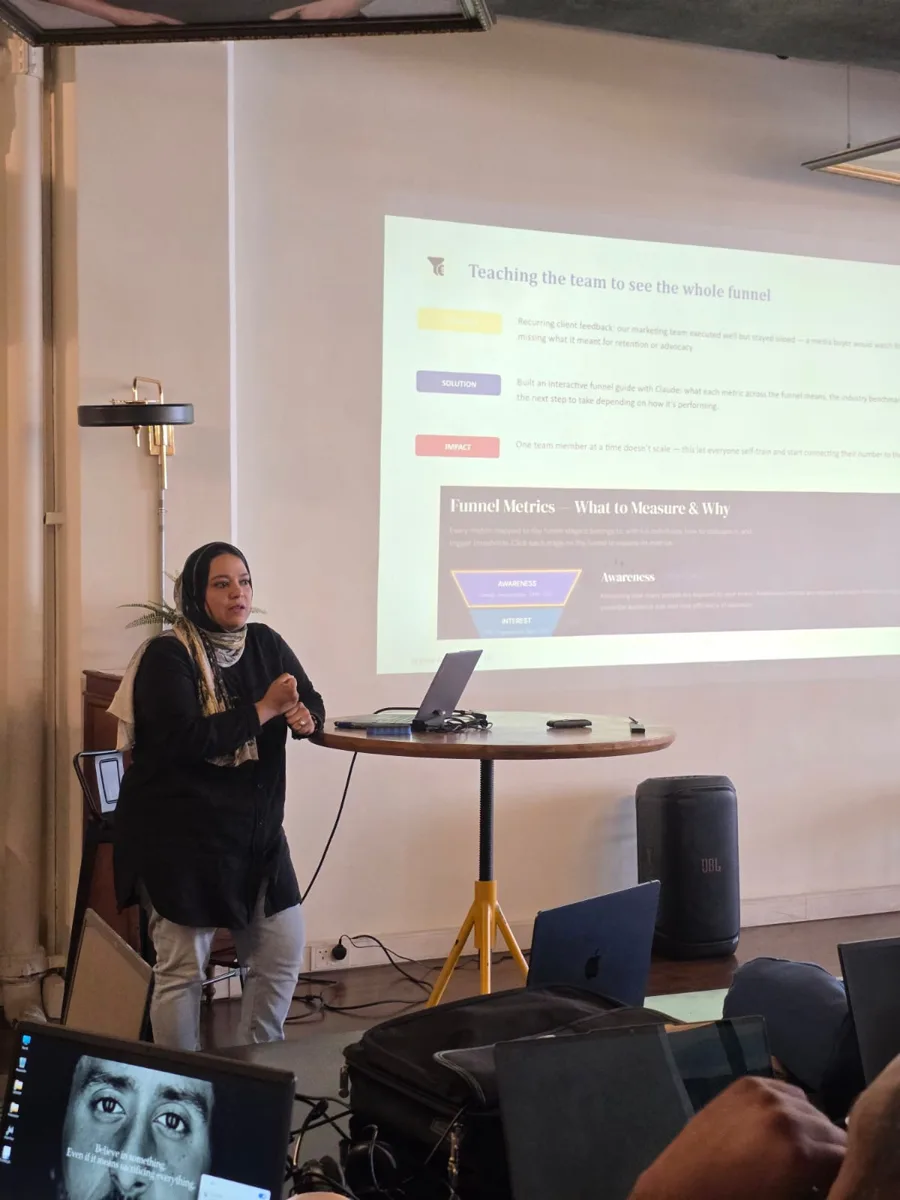
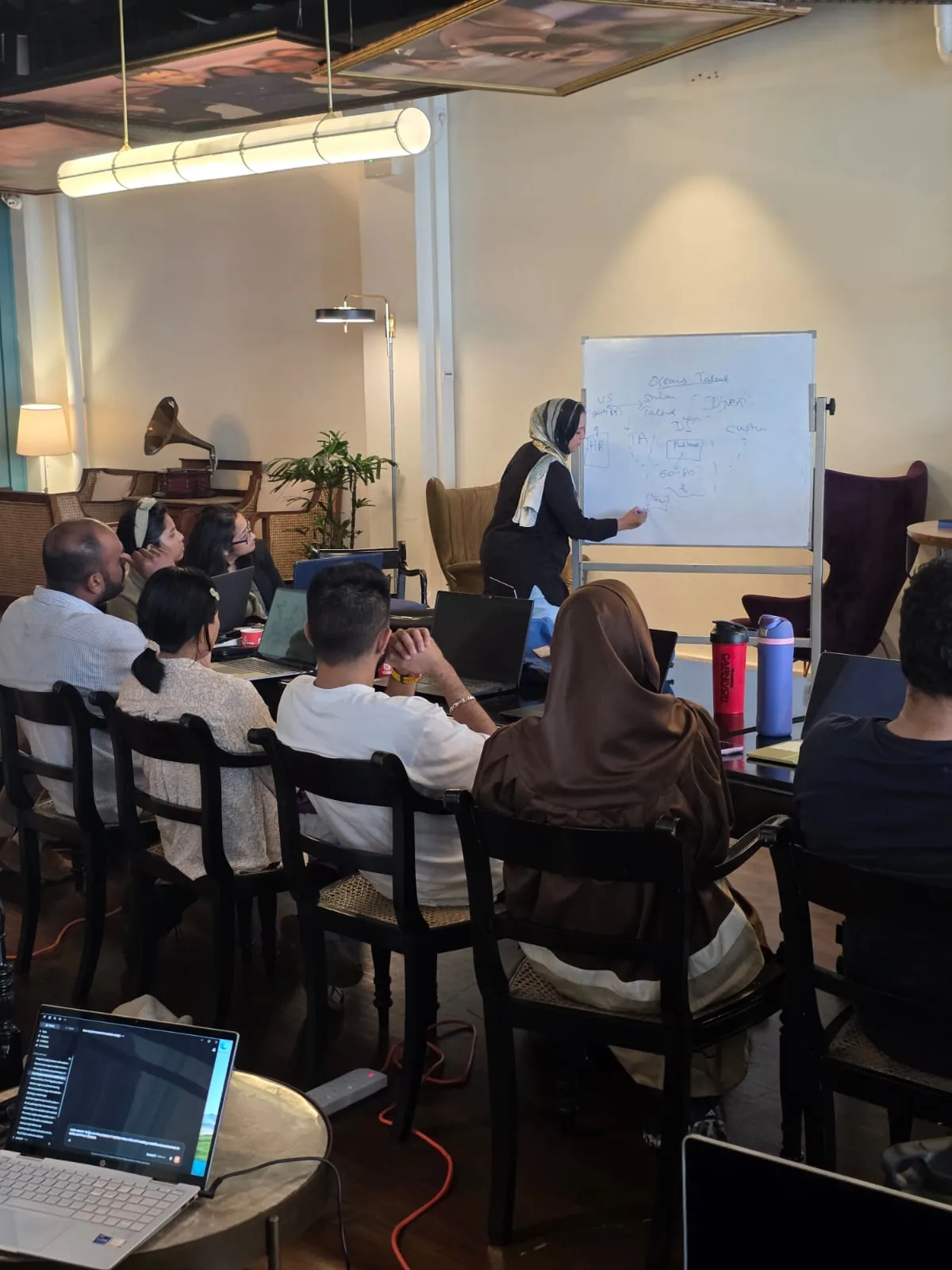
What AI looks like inside a real function, taught by people who run those functions. Sudeshi led HR for years, as Global Head of HR at Zone24x7 and then Director of HR at Boardpac, before building Mira, an AI HR operations agent. Faahika has led marketing and operations teams, including at Enactor and Oceans, and she showed a real case from her own team: an interactive funnel guide she built with Claude, so every marketer can see what each funnel metric means, how it compares to the benchmark, and what to do next. Before the session, everyone chose the specialisation they would build in.


Enterprise AI and AI security
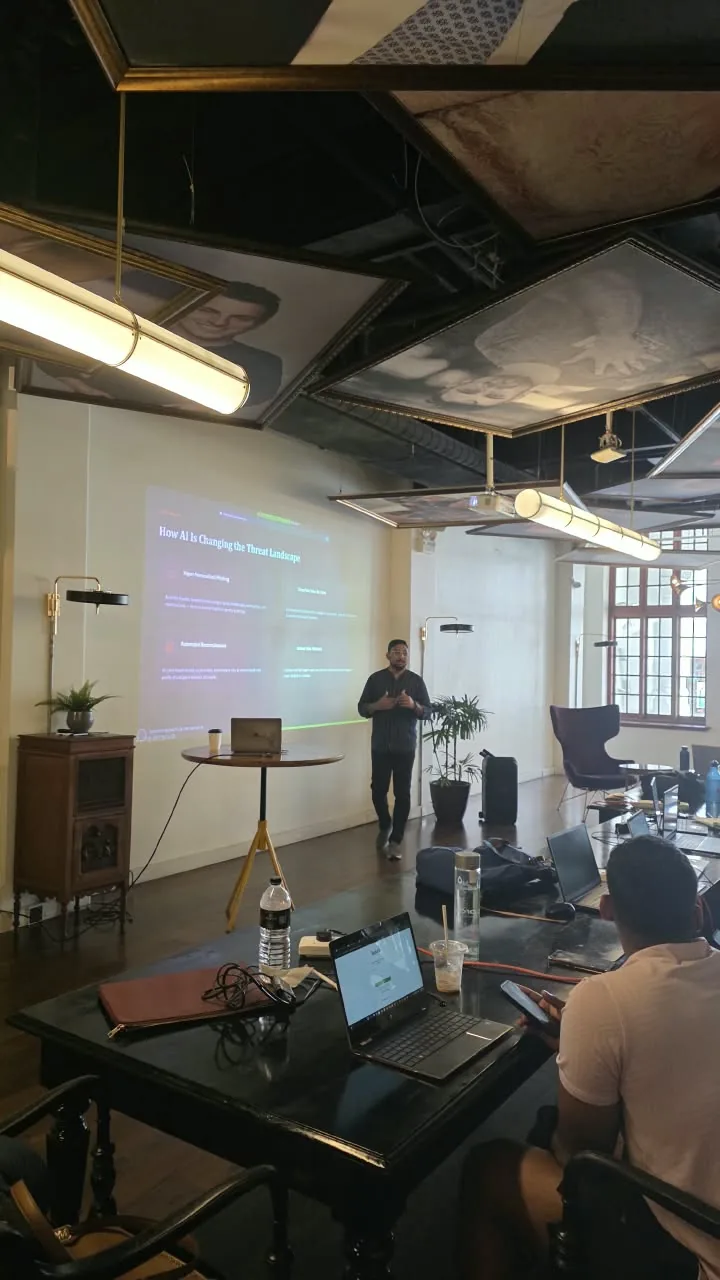
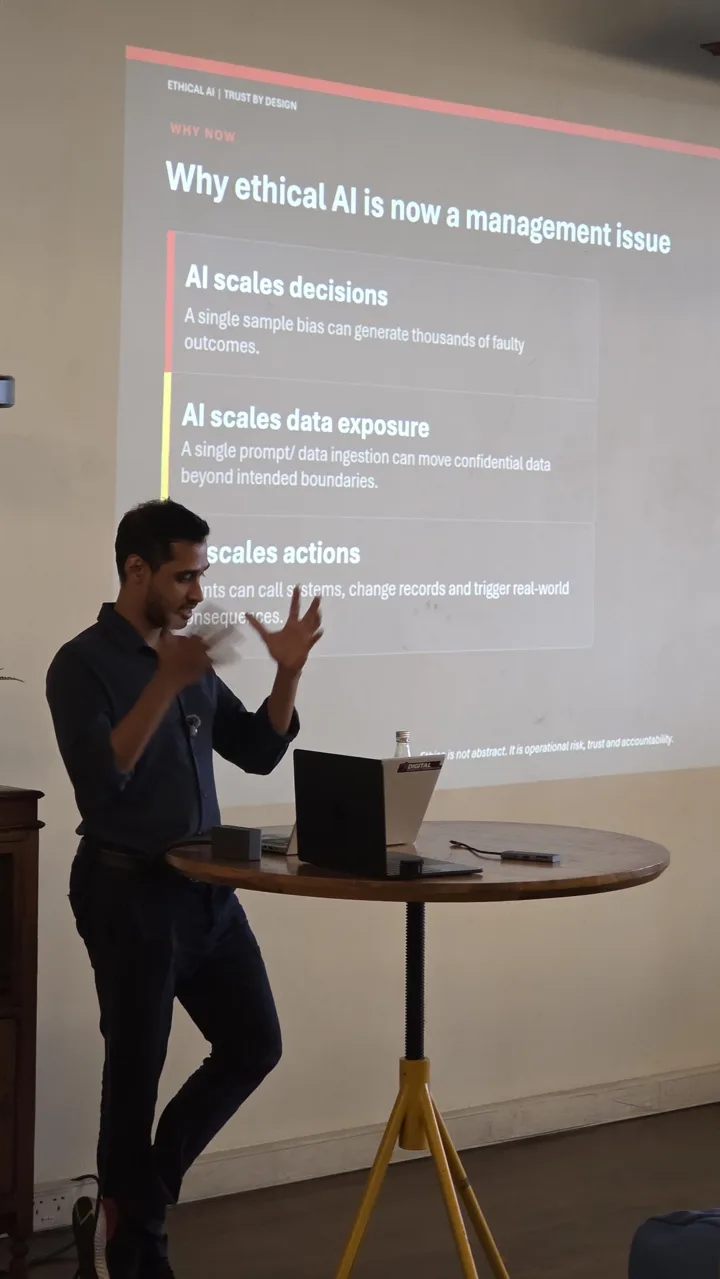
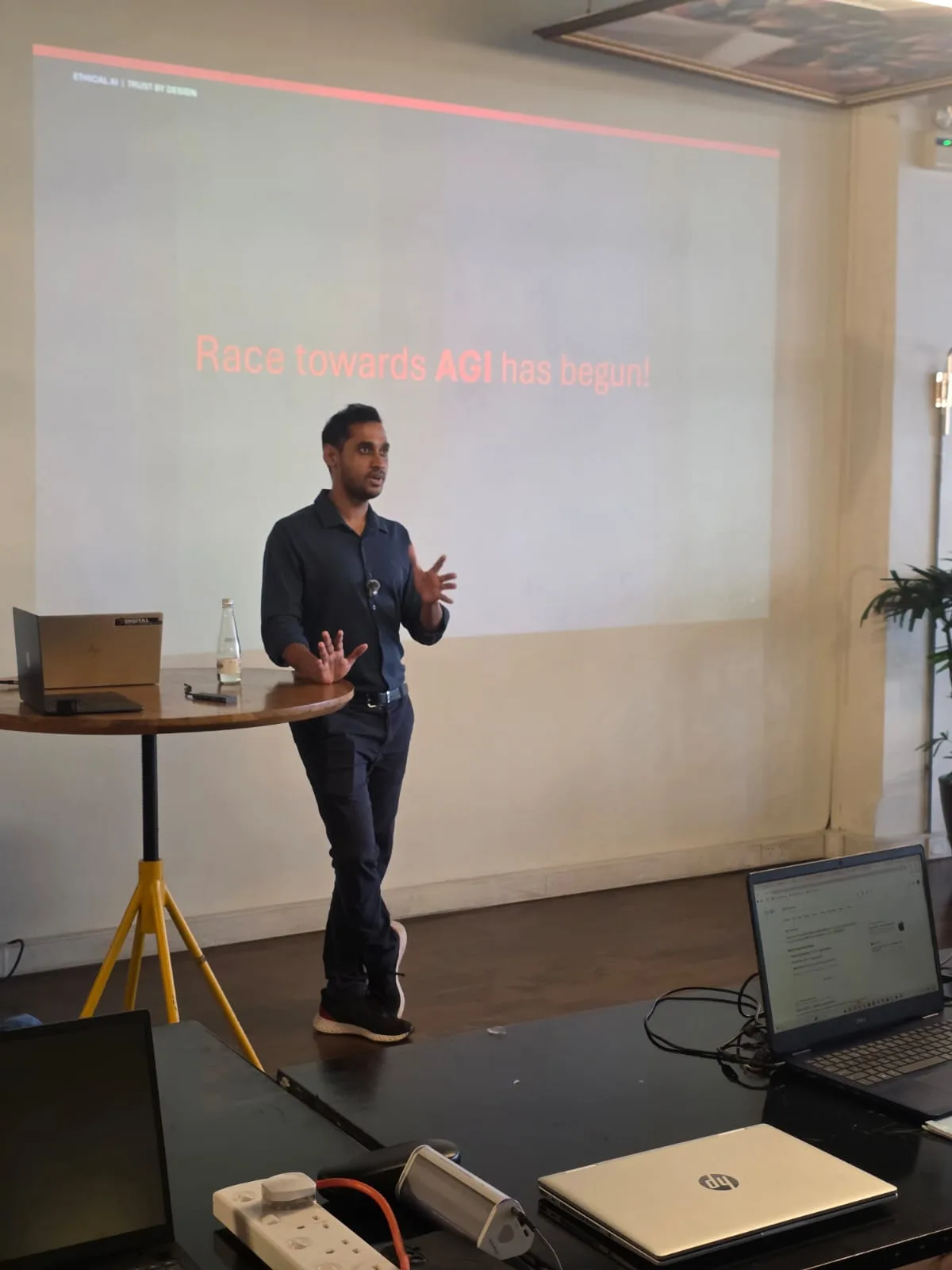
Two sides of AI at scale. Dilusha, who heads agentic AI at MAS Holdings, showed how AI actually gets adopted across a large enterprise. Anas, who works on identity and cyber security at Sysco LABS, showed how AI is changing the threat landscape, and everyone went home with a reading list on prompt injection. Ethical AI came up as a management issue, not a technical footnote.


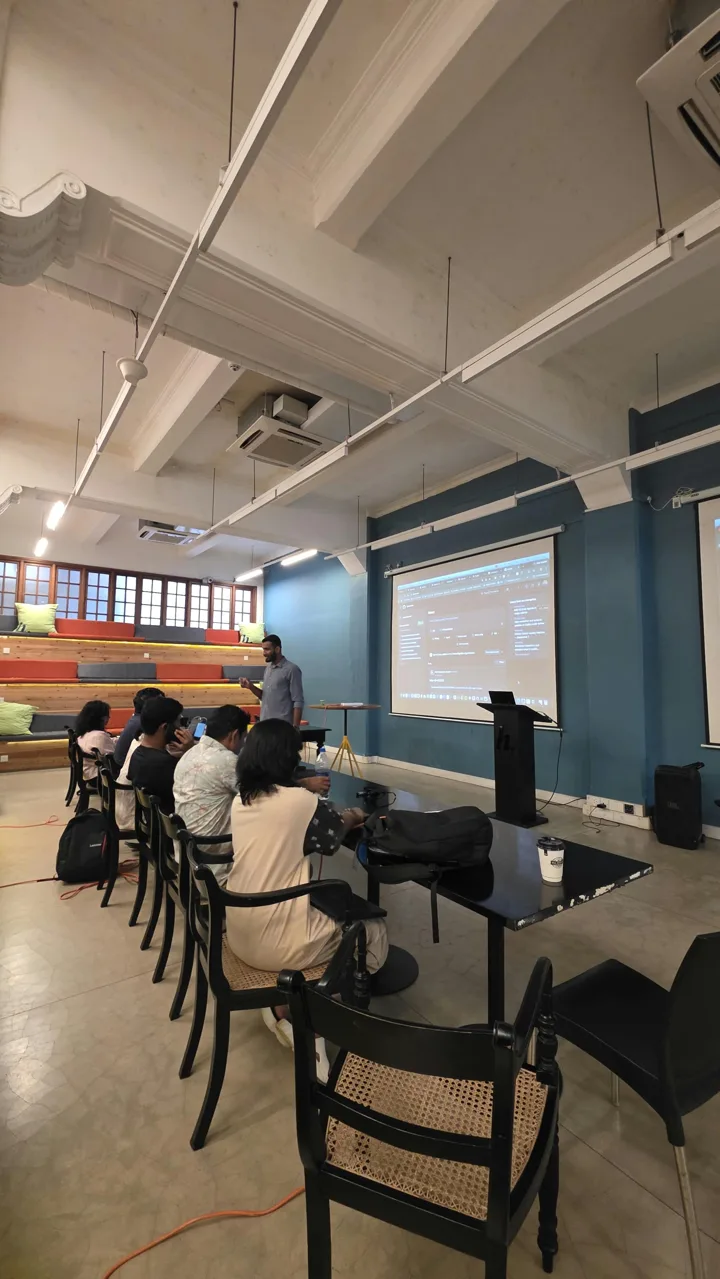
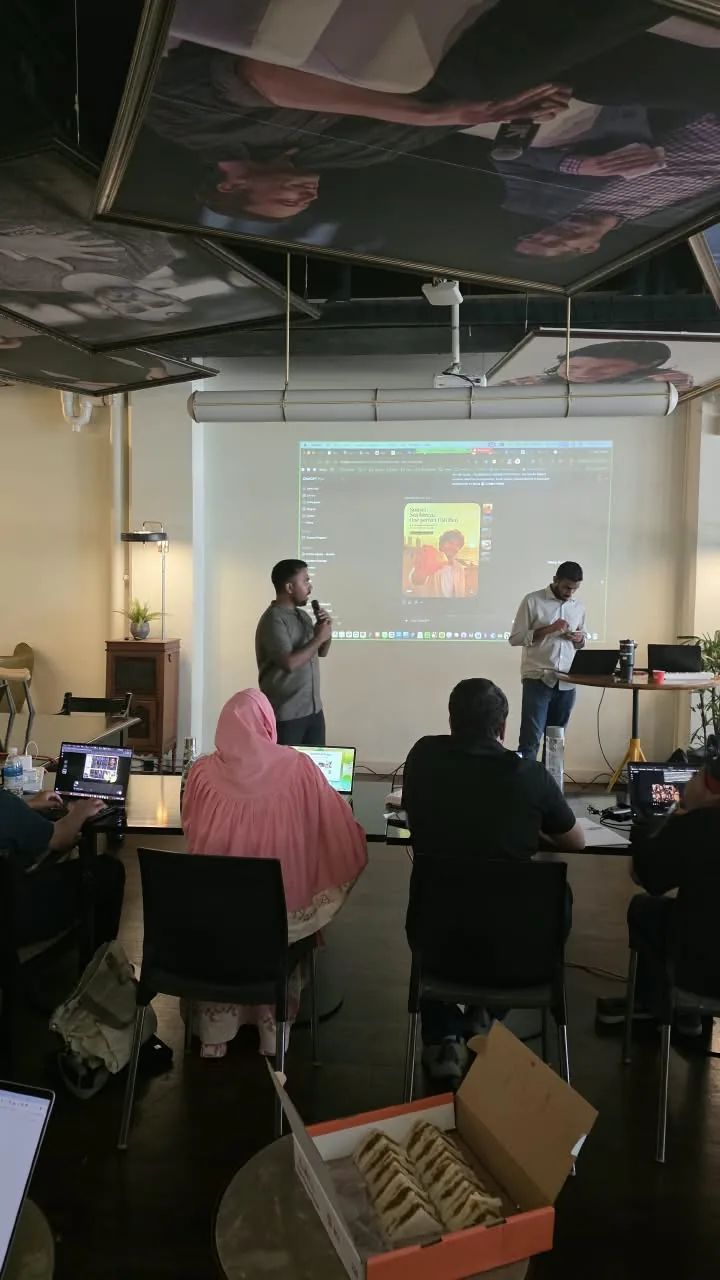
Build day and the final hackathon
We started an hour early to cover agents, then spent the afternoon building something real, for a business, for work or for yourself. Every build went into the Cocoon Build Track, which we launched that day so each build had a brief, a clock and a way to submit.
Personal branding, SEO, AEO and business analytics, then final presentations
Alongside the final presentations, I ran a session on personal branding, SEO and AEO, and business analytics: how to show what you can now do, be found for it, and measure it. Then presentations, questions from the room, and a cohort that by then felt more like a group of colleagues than a class. Certificates followed in October.
The trainers
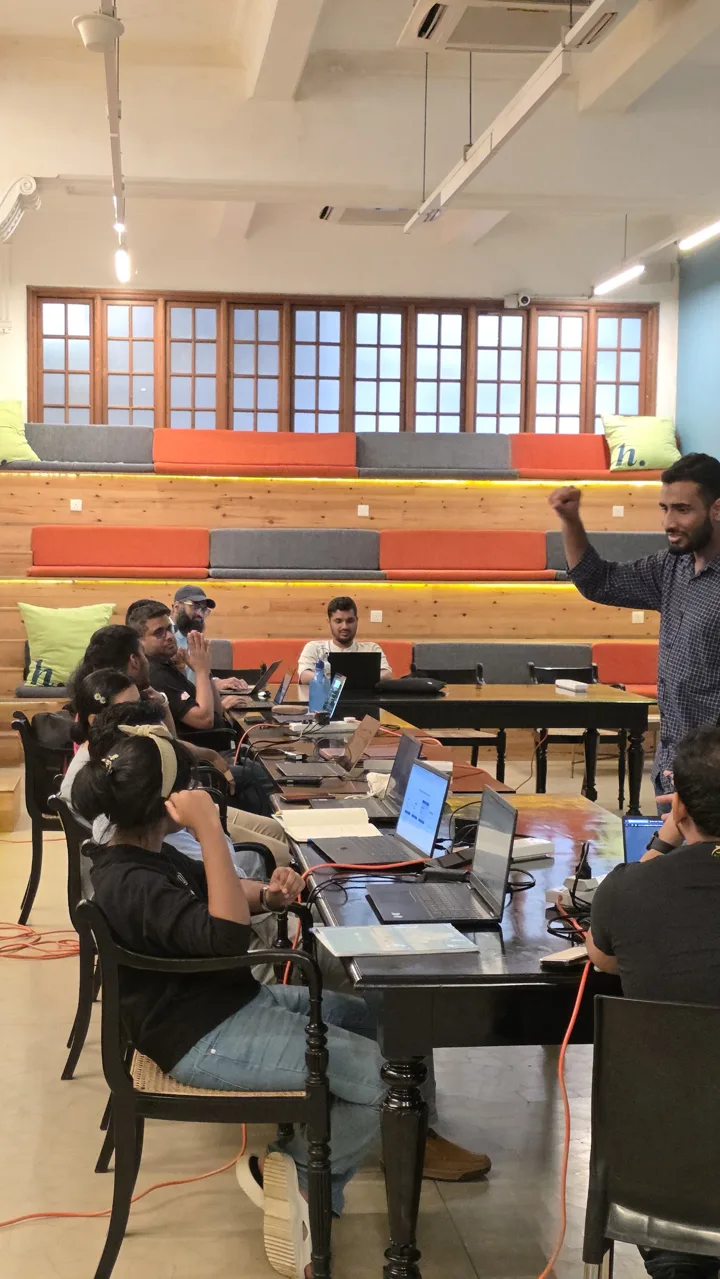
Nine practitioners taught Cohort 1, all of them from the Cocoon trainer bench and all of them people who use AI in their own work every day. That was the point: nobody in the room was teaching from a script. Tap any of them to see their LinkedIn.
Ammar AhamedFounder, Cocoon · Head of Growth, Vector Agents (RedemptAI)Dilusha PereraHead of Agentic AI, MAS HoldingsFaahika FakirHead of Operations, OceansDr Sithira AmbepitiyaHead of AI, AIGP · MBBS turned AI LeadSudeshi JayasuriyaFounder, Mira AI · Former Director of HR, BoardpacLishan PeirisAssistant Manager, Brand, Wavenet · Lecturer, AMDTAbubakker BakthathiFounder & CEO, Paralox MediaAnas IlyasAssociate Lead, IAM & Cyber Security, Sysco LABS Sri LankaSaad MazharBusiness Development, Spectrify AI · Co-Founder, Tank SuddaSeveral of them also appear on BuildrLabs’ own Applied AI page, because they are the people who teach it. You can meet the rest of the bench on our trainers page.
What we delivered
Underneath the Saturdays, the curriculum ran on six threads, each one built around the participants’ own work:
- Foundations and your personal AI stack
How AI works, how to direct it well, and a stack that fits your own job.
- Multimodal AI and custom assistants
Voice, images, documents and meetings as inputs, and assistants that know your material.
- Creativity
On-brand visuals, video and audio without a design team.
Capstone: a 60-second AI-generated video ad.
- Automation, agents and apps
Work that runs itself, agents that take on a task, and apps published at a live link.
Capstone: a live AI-powered web app.
- Ethics and security
Using AI safely, responsibly and with judgement.
- Personal branding, SEO, AEO and analytics
Showing your work, being found for it, and measuring what it changes.
What they built
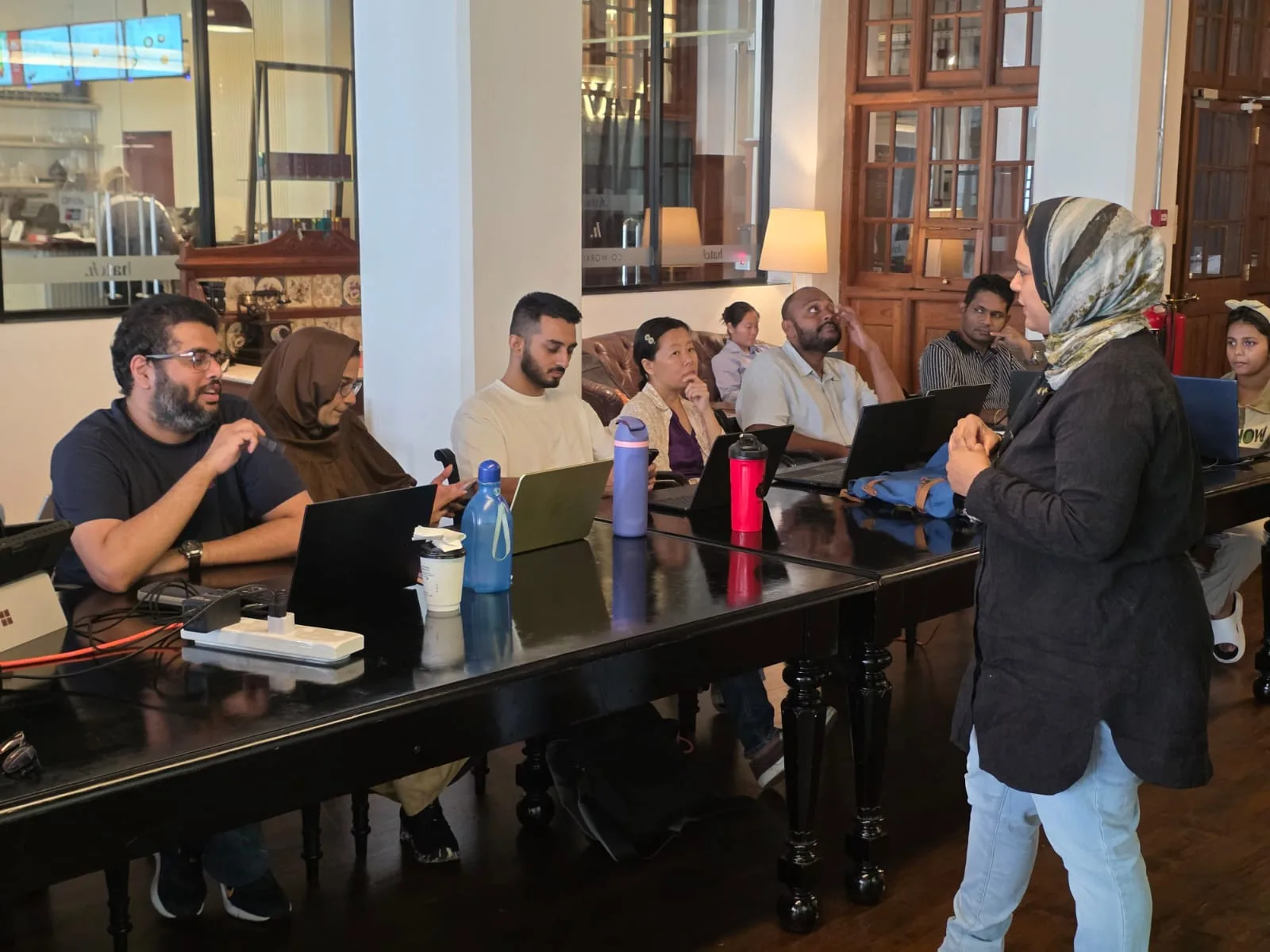
The real test of an applied AI course is what people leave with. A few of the builds and specs that came out of Cohort 1:
- An executive contact engine, written up as a full product spec: contacts pulled from Apollo into Airtable, with a Replit app on top.
- A licence-renewal tracker, specced as a build prompt, the kind of internal tool that usually waits a year for an IT budget.
- A stock market explainer that lets people follow what is happening in businesses without the financial jargon, running on Cloudflare Workers. Its builder kept going after the cohort ended and shared the first working demo with the group.
- 60-second video ads from the creativity week, and agents from the build day.
None of these came from developers. They came from people in sales, operations, HR and management. The cohort was also offered five seats at the final of the Veracity x Hatch Hackathon, to watch the top teams present.
How people grew
Watching a cohort change is the best part of this job. Three shifts stood out.
From “which tool?” to “what problem?”
In the first weeks the most common question was which app to use. By the end, people started from the problem and judged tools against it. That habit keeps you current long after any course ends.
From chatting to building
People who arrived using AI to rewrite emails left having specced products, wired up automations and shown working builds to a room. The jump from asking AI for answers to having it do the work is the one most professionals never make on their own.
From personal productivity to leading change
The leaders in the room started asking a different question: not how do I save an hour, but how should my team work now. That question is where AI starts paying back for a company, and it is why the mixed room mattered so much.
After six o’clock
Officially the sessions ended at six. In practice, six o’clock was when the second session started.
We would close the laptops and keep talking, often for hours. About the businesses people were running and the ones they wanted to start. About what AI is doing to jobs, here in Sri Lanka and everywhere else. About that week’s news, and where all of this is going. Some of my favourite explanations came out of those evenings, like the difference between open source and open weights: if you are handed an apartment you can furnish and paint but not rebuild, that is open weights; if you get the apartment, the blueprints and the right to change anything, that is open source; if it comes furnished and you can only live in it, it is neither.
Those conversations were never on the schedule, and they were some of the most valuable hours of the whole cohort, for them and honestly for me. As I wrote to the group on the last night, every day felt more like a discussion than a class.
The cohort ended. The community didn’t.
Cohort 1 finished in September, but the group did not go quiet. We still share what is new in AI as it happens, so nobody’s knowledge freezes on the day of their certificate. Since the last session, the group has had:
- New model launches, and what they actually mean, including the honest caveat that a lab’s own benchmark scores need independent checks.
- A plain-language explainer of Jev, the AI that makes decisions about text instead of writing it, with a lab to try it.
- A CS50 study tracker, built for anyone who wants to go deeper into code.
- Videos made and edited entirely with Claude, and how they were done.
- A first look at Cocoon Studio, our content studio with 50+ image, video and sound models in one place.
- Our mid-month AI update, so everyone can keep up in a few minutes.
I have also been following up one to one. People message to show what they have built since, to ask about a tool they have seen, or to check whether an idea is worth building. That is the part of this work I value most. An applied AI course should change how someone works for years, not for eight Saturdays.
Thank you to Isuru and Yoosuf at BuildrLabs, who looked after everything around the sessions, and to every trainer who gave up a Saturday to teach.
Cohort 2, and what’s next
Cohort 2 of the Applied AI Bootcamp is already under way at Hatch Works. If you want in, there are three ways to go from here:
The BuildrLabs Applied AI Bootcamp runs on Saturdays at Hatch Works, Colombo. Eight live Saturdays, no coding needed.
Apply here ↗ Talk to Cocoon instead → Corporate AI training for your team →FAQ
Who delivers the BuildrLabs Applied AI Bootcamp?
Cocoon. BuildrLabs runs the Applied AI Bootcamp at Hatch Works in Colombo, and Cocoon, a Colombo-based AI training company, is its delivery partner: Cocoon designed the curriculum and its trainers taught the sessions. Ammar Ahamed, Cocoon's founder, was the lead trainer for Cohort 1.
What is the BuildrLabs Applied AI Bootcamp?
An applied AI course for non-technical professionals: eight live Saturdays at Hatch Works, Colombo, with no coding needed. Participants build a personal AI stack, learn creative AI, automation, agents and app building, take a domain track, and finish with a build day and final presentations.
When did Applied AI Cohort 1 run?
From July to September 2026, on Saturday afternoons at Hatch Works in Colombo, with Zoom for anyone who could not attend in person. Certificates were issued in October 2026.
Who were the trainers on Applied AI Cohort 1?
Ammar Ahamed (lead trainer, Cocoon), Lishan Peiris and Abubakker Bakthathi (AI for creativity), Dr Sithira Ambepitiya and Saad Mazhar (automation, APIs, MCP and agents), Sudeshi Jayasuriya (AI for HR), Faahika Fakir (AI for marketing operations), Dilusha Perera (enterprise AI) and Anas Ilyas (AI security). All of them are Cocoon trainers.
Who was Cohort 1 for?
A mix of business leaders, founders, senior professionals, mid-level professionals and students. Nobody needed a technical background.
Is there another cohort, and how do I join?
Yes. Cohort 2 is under way at Hatch Works. You can join the public cohort through BuildrLabs, take Cocoon's 12-week AI for Professionals programme, or bring Cocoon's corporate AI training to your team.
The feedback
It was amazing to see the feedback once the certificates went out. Two of the posts from the cohort:
Not sure where you stand with AI? Find out in ten minutes, free.
Take the AI Readiness Score →