What Does It Mean to Be AI Native? (It Has Nothing to Do With Your Age)
Being AI native means AI is part of how you think through work, not an app you remember to open. AI natives bring AI in at the start of a problem rather than the end, they know where it fails in their own field, and they change the shape of the work around it instead of sprinkling it on top. It is a set of habits you can learn, not an age group. Someone of fifty with good judgement can be far more AI native than a nineteen-year-old who pastes, prays and sends.
The digital native mistake, again
In 2001 the writer Marc Prensky popularised a phrase that stuck: digital natives. Young people who had grown up with computers, the internet and video games would think differently, he argued, from the "digital immigrants" who arrived later and would always speak technology with an accent.
It was a powerful idea. It also turned out to be mostly wrong. Growing up surrounded by technology did not make people good at judging it. When Stanford researchers tested students' online reasoning in 2016, more than 80% of middle-school students believed a native advert labelled "sponsored content" was a real news story. The natives were fluent in using the tools and untrained in questioning them.
We are about to make the same mistake with AI. The assumption is that anyone under twenty-five is an "AI native" because ChatGPT arrived while they were at school, and that everyone else is an immigrant who will always be catching up. Both halves are wrong, and believing them is expensive. Young people skip the judgement they need. Experienced people talk themselves out of a skill they are unusually well placed to build.
So what does AI native actually mean?
Here is the definition we use at Cocoon:
An AI native is someone for whom AI is part of how they think through work, not a tool they remember to open. They reach for it early, check it by reflex, and change the shape of the work around it.
Three parts, and all three matter:
- Early. AI comes in at the start, when you are thinking, exploring options and drafting, not only at the end to polish the grammar.
- Checked. AI natives know the edges. They know what AI is brilliant at in their field and where it produces confident nonsense, and they check accordingly.
- Redesigned. They do not run the old process with AI sprinkled on top. They ask what the process should look like now that AI exists.
Notice what is missing from that list: age, job title, coding ability and the number of AI apps on your phone. Being AI native is about how you work, which is why it can be learned.
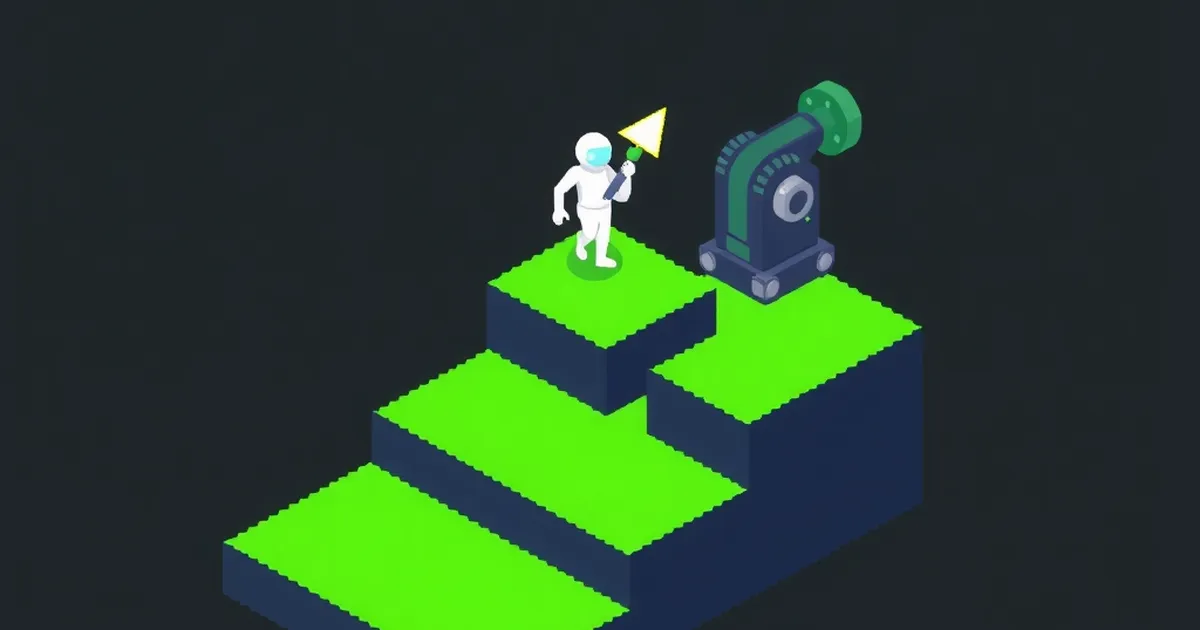
Tourist, user, native: where are you?
Most people sit on one of three steps. None of them is a verdict on you; they are a map of where to go next.
- Asks one-line questions, like a search engine
- Copies, pastes, sends
- When it is wrong, blames the tool and stops
- Emails, summaries, rewrites
- Edits the output before using it
- When it is wrong, fixes it and moves on
- Brings it in at the start of most real work
- Gives context, asks it to push back, verifies
- When it is wrong, learns where the edge is
If you know Cocoon's 3 As of AI, this will feel familiar. The tourist rarely gets past acceleration. The user lives there, saving time on drafts. The native moves easily between all three, acceleration, augmentation and automation, and always knows which one they are in, because that tells them how much to trust what comes back.
Six habits of AI natives (steal them)
1. Draft zero is never blank
AI natives almost never start from an empty page. They start from an AI attempt they can react to, because reacting is faster than creating, and a bad version shows you exactly what a good one needs. The best of them write two lines of their own thinking first, so the AI's first idea does not quietly become theirs. (More on that in Part 3.)
2. They give context, not commands
"Write a LinkedIn post about our launch" gets you the same post everyone else gets. An AI native writes the brief they would give a sharp new colleague: who it is for, what good looks like, what to avoid, and an example of something they liked. Most disappointing AI output comes from a thin request, not a weak model. Our guide to the anatomy of a good prompt breaks this down.
3. They ask it to argue
Most people use AI to agree with them. AI natives use it as a sparring partner. "What is weak about this plan?" "What would a sceptical finance director say?" "Give me the strongest case against." The answer is not always right, but it is rarely useless, and it is available at 11pm when nobody else is.
4. They know the jagged edge
In a 2023 study with Boston Consulting Group, consultants using GPT-4 on tasks inside AI's capabilities completed 12% more tasks, 25% faster, at more than 40% higher quality. On a task designed to sit just outside those capabilities, consultants using AI were 19 percentage points less likely to get the right answer than those working without it. The researchers called this the jagged frontier: AI's ability has no clean edge, and the edge sits in a different place for every job. AI natives map their own.
5. They turn repetition into tools
The third time they paste the same prompt, they save it as an assistant, a template or an automation. Chatting is where everyone starts. Building is where the leverage is, and you no longer need to code to do it. Part 4 is a five-step ladder from saved prompts to agents.
6. They delegate outcomes, not keystrokes
With agents that can browse, use tools and work through several steps, the question shifts from "write this for me" to "get this done, and show me what you did". That needs a different skill: setting a clear definition of done, then checking a sample of the work rather than redoing all of it.
Not sure which step you are on? The free AI Readiness Score asks behavioural questions, takes about ten minutes, and tells you where to focus first.
Take the AI Readiness Score →Six signs you are not there yet (no shame, just a map)
- You use it like Google. One-line questions, first answer accepted.
- You only use it for emails. Useful, but it is the shallow end of the pool.
- You hide it. If you would be embarrassed for your manager to see how you use AI, either the use needs fixing or the culture does. Usually it is the culture.
- You have never seen it be wrong in your field. That does not mean it is always right. It means you are not checking.
- Every chat starts from zero. No saved instructions, no projects, no examples of your own work for it to learn from.
- You gave up after it failed once, a year ago. Models change every few months. An opinion formed on last year's model is out of date.
Why age is the wrong lens
The failure of the digital native idea has a hopeful flip side. If being native is not about when you were born, it can be learned, and the hard half is the half experienced people already have.
Being AI native takes two things: comfort with the tool and judgement about the output. Comfort takes a few weeks of regular use. Judgement takes years inside your field, which is exactly what someone at forty or fifty brings to the table. A senior accountant can tell in three seconds that an AI's tax summary "feels off". A graduate cannot, however fast they type. We wrote more about this in why your age is an advantage when learning AI.
For young people the situation is reversed. The comfort comes free; the judgement does not. A student who grew up with ChatGPT can produce an essay in a minute and still have no idea whether it is any good. That is why the most useful thing schools can teach now is not "how to use AI" but "how to judge it", and why we built Cocoon Kids around making and testing AI rather than consuming it. If you are a teacher in Sri Lanka, our Teachers' Day fellowship offers one free seat on AI for Educators in each of the 25 districts, with applications open until 31 October.
The bar has moved
In April 2025, Shopify's chief executive Tobi Lütke told his staff that "reflexive AI usage is now a baseline expectation". Not a bonus and not a pilot: a baseline, like being able to use email. Many companies have since sent versions of the same message, some more gracefully than others (Part 5 looks at why the same memo can land as an invitation or a threat).
Whatever you think of the memos, the direction is clear. Being AI native is becoming the default expectation for knowledge work, in the way "computer literate" quietly vanished from CVs once everyone was assumed to be. The good news is that the distance between tourist and native is shorter than it looks. It is mostly habits, and habits are built through repetition on real work, not by watching demos.
How to become AI native: start this week
- Find your starting step. Take the AI Readiness Score. Ten minutes, behavioural questions, no trick answers.
- Pick three tasks you do every week. Use AI on them every single time for two weeks, and keep a running note of what it gets wrong. That note is the beginning of your own map of the jagged edge.
- Ask one question before any real piece of work: "What would the AI-native version of this look like?" Sometimes the answer is "the same as now". Often it is not.
- Make it social. Find one colleague to swap prompts and failures with each week. AI habits spread from person to person far faster than from training slides.
- Read the rest of this series. It walks through an AI-native workday, the judgement paradox, building your own tools, and what makes a whole team AI native.
- What Does It Mean to Be AI Native? (It Has Nothing to Do With Your Age)
- A Day in the Life of an AI-Native Professional (Hour by Hour)
- The AI-Native Paradox: Why Your Own Judgement Matters More, Not Less
- AI Natives Don't Just Chat. They Build.
- What Makes a Team AI Native? (It's Not the Tools You Bought)
Frequently asked questions
What does AI native mean?
Being AI native means AI is part of how you think through work, not an app you remember to open. AI natives bring AI in early, check its output by habit, and redesign their work around what it does well. It describes how someone works, not their age or job title.
Is Gen Z automatically AI native?
No. Growing up with a technology makes people comfortable with it, but not necessarily good at judging it. Research on so-called digital natives found many young people could not tell sponsored content from news. Young people often have the comfort with AI but still need to build the judgement.
Can you become AI native later in your career?
Yes, and experienced people have an advantage. Being AI native needs comfort with the tools, which takes weeks, and judgement about the output, which takes years in a field. Mid-career and senior professionals already have the harder half.
What is the difference between AI native and AI-first?
AI-first usually describes a company's strategy or a memo from its leaders. AI native describes how people actually work day to day. A company can declare itself AI-first and still have very few AI-native people, which is why habits and training matter more than announcements.
How long does it take to become AI native?
Most people can move from occasional use to daily, confident use in four to six weeks of regular practice on their own work. Becoming fully AI native, where you redesign processes and build your own tools, usually takes a few months of steady habit.
Sources
- Marc Prensky, Digital Natives, Digital Immigrants (On the Horizon, 2001)
- Stanford History Education Group, Evaluating Information: The Cornerstone of Civic Online Reasoning (2016)
- Dell'Acqua et al., Navigating the Jagged Technological Frontier (Harvard Business School working paper 24-013, 2023)
- Tobi Lütke, Shopify internal memo on AI usage, shared publicly 7 April 2025
Next in the series, Part 2: A Day in the Life of an AI-Native Professional (Hour by Hour)
Read Part 2 →